
Self-custodial financial ecosystem for global market access built for regulation
Compliant, on-chain-settled exposure to the world’s assets — built for the markets the incumbent rails don’t reach.
Trading Platform
Licensed synthetic exchange
Digital Identity
Access Standard · KYC / KYB / KYT
Self-Custodial Wallet
Client-held keys, always
On-Chain Settlement
Public L2 · tokenisation roadmap
Built for regulation, non-custodial synthetic exchange
Compliant, on-chain-settled exposure to the world's assets — built specifically for the markets the incumbent rails do not reach.
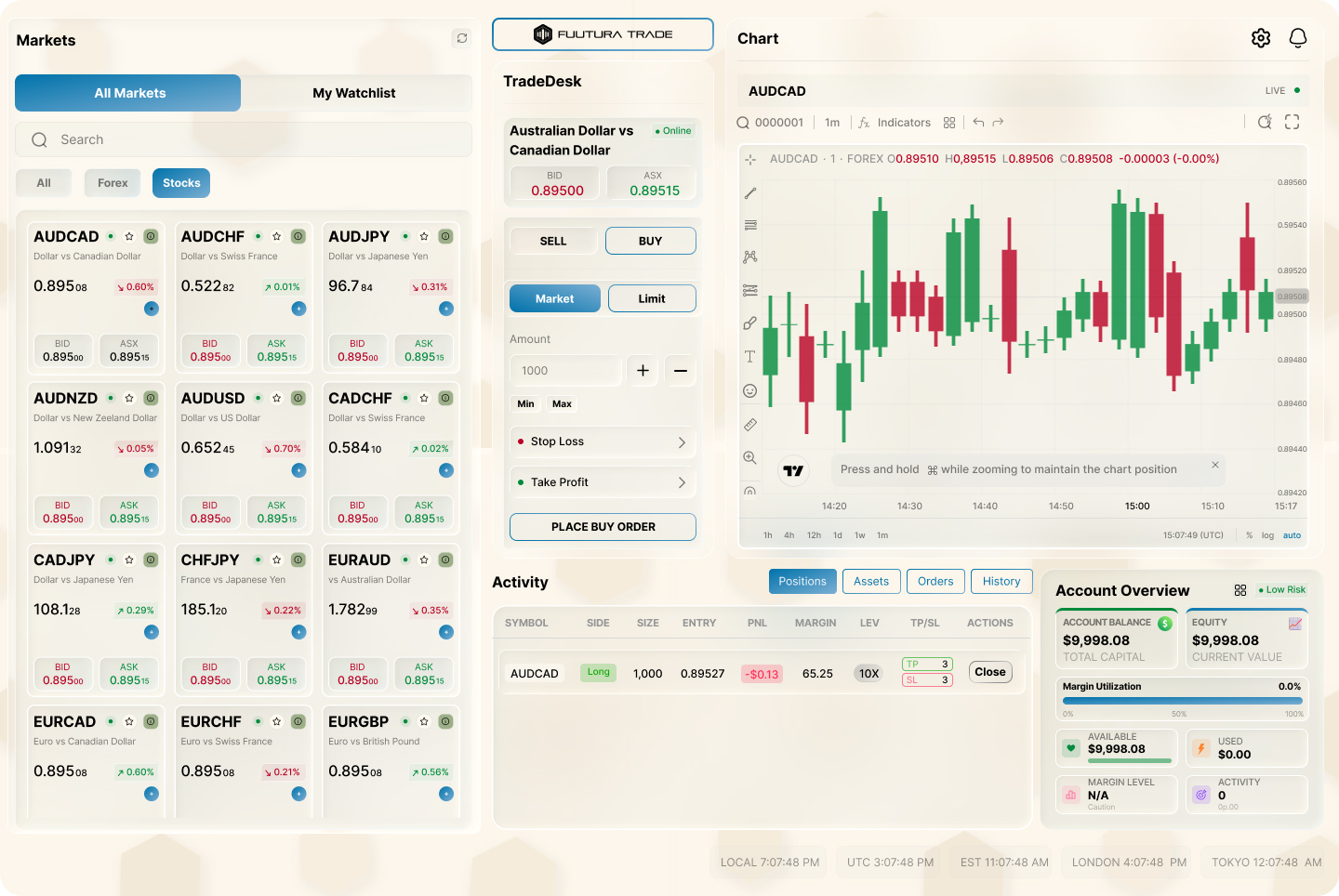
A full terminal, not a widget
Markets, watchlist, order ticket, live chart, open positions and account health on one surface.
One account, six asset classes
Crypto, global equities, indices, FX, commodities and tokenised real-world assets — all reachable from the same account that holds a client's local balance.
Every order type that matters
Market and limit entries, with stop-loss and take-profit attached at the point of execution.
Leverage earned by tier
Entitlements advance on a demonstrated ladder rather than unlocking at signup.
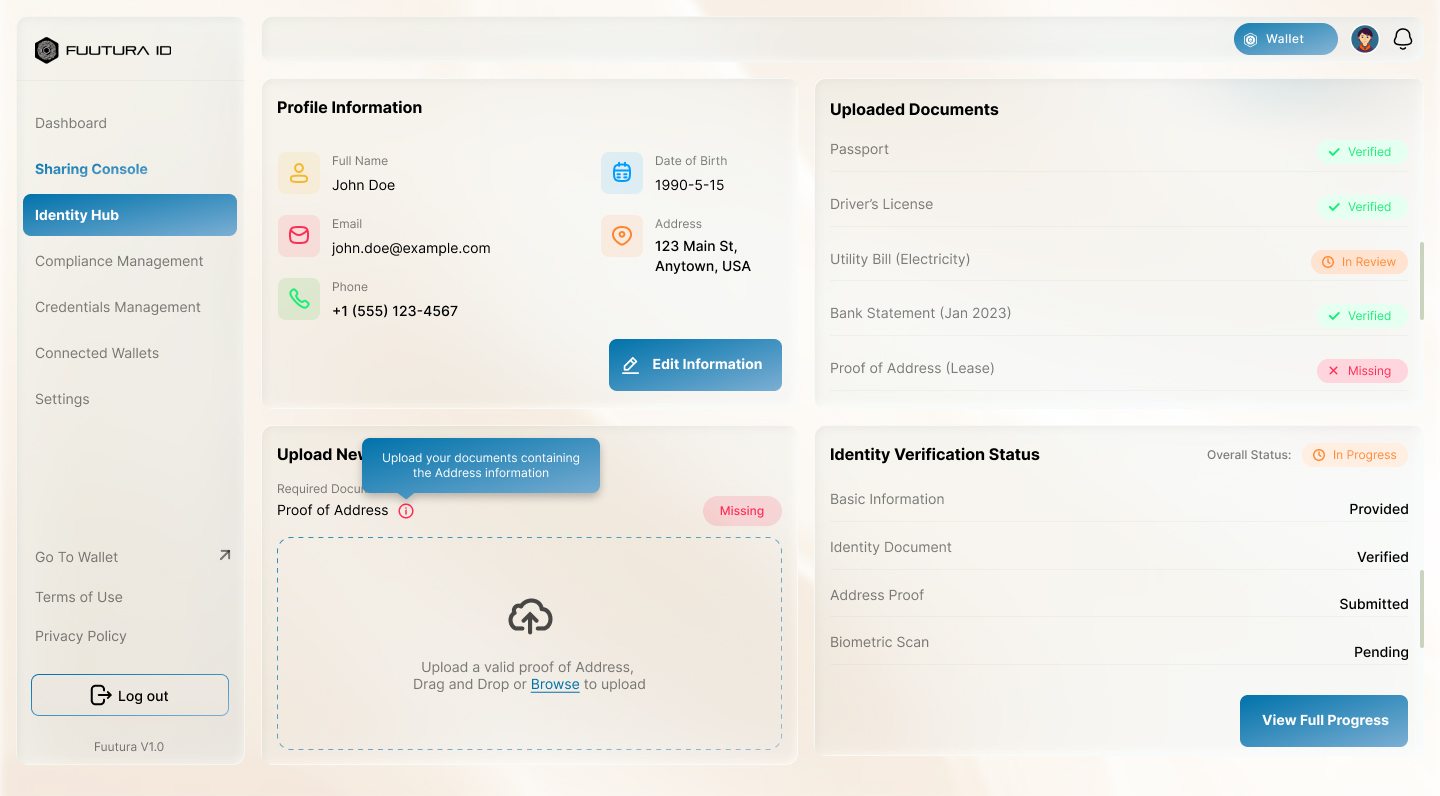
One verification. Every door.
Identity is the layer every other Fuutura product reads from. Prove who you are once and that proof carries across custody, markets and payments — with no re-onboarding at any of them.
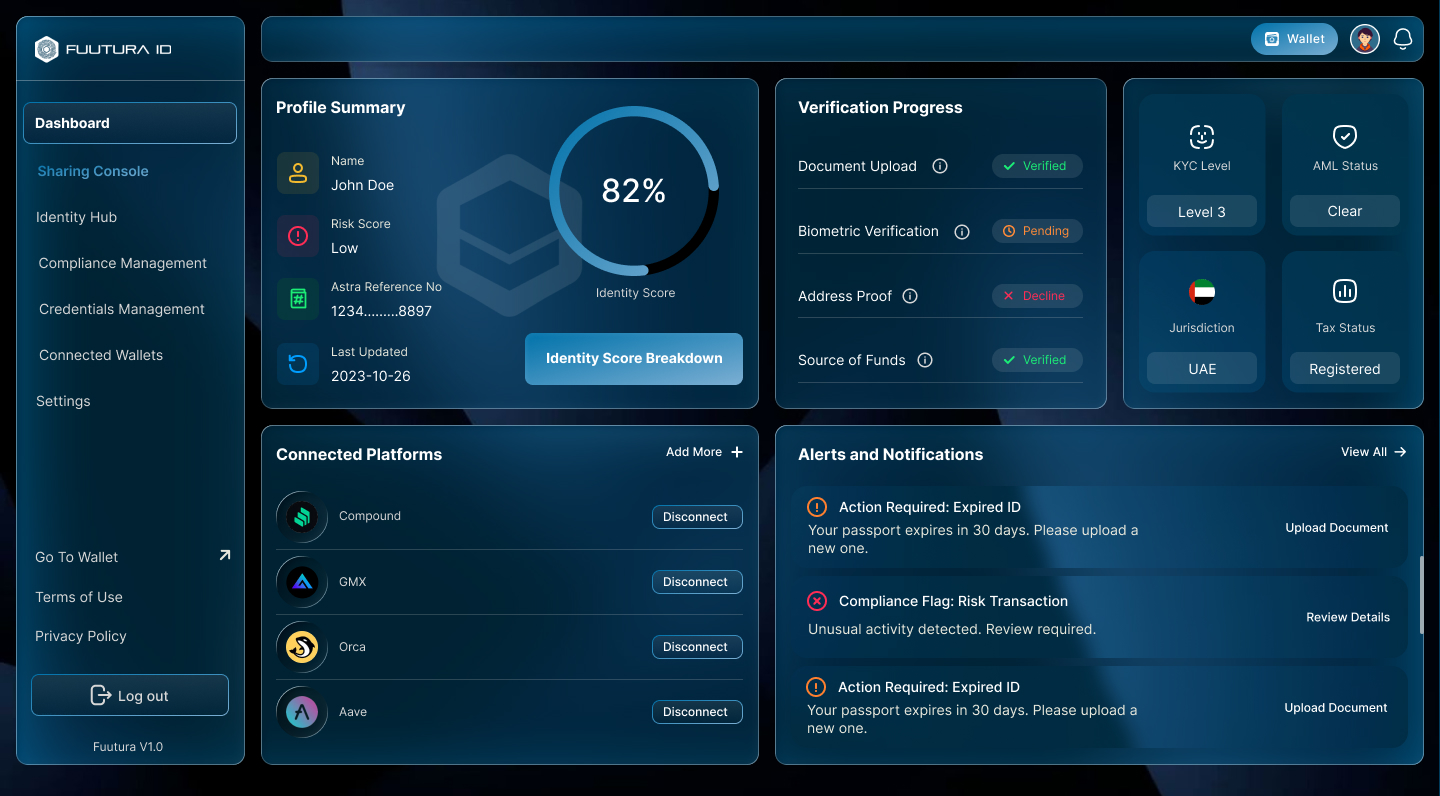
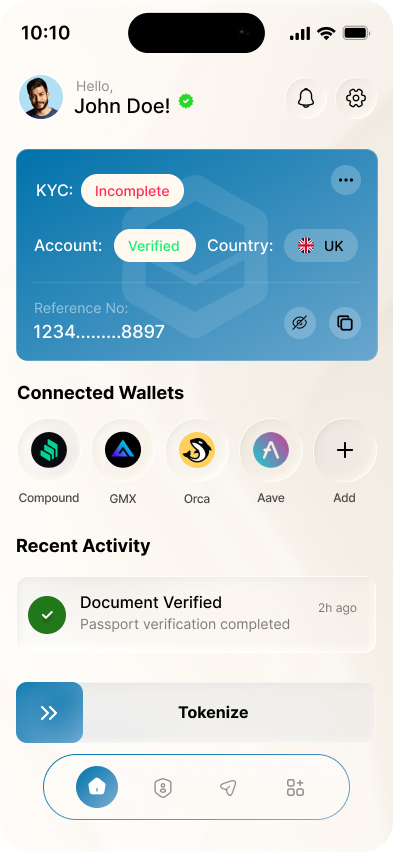
A live identity score
Verification state, risk band and jurisdiction resolve into one score a partner can read — rather than a folder of documents they must interpret.
Tiered by capability
KYC levels map to what a client may actually do. Entitlements widen as verification deepens, and never before.
Portable across platforms
Connected wallets and third-party venues read the same credential, so onboarding elsewhere becomes a permission rather than a process.
Continuous, not one-shot
Expiring documents, sanctions hits and risk flags surface as alerts against a living record.
Verification in under a minute, almost anywhere
The same checks a bank runs over a day, completed in the time it takes to read this paragraph — and inclusion fails on the edge cases, so coverage reaches the residence permit and the regional licence, not only the passport.
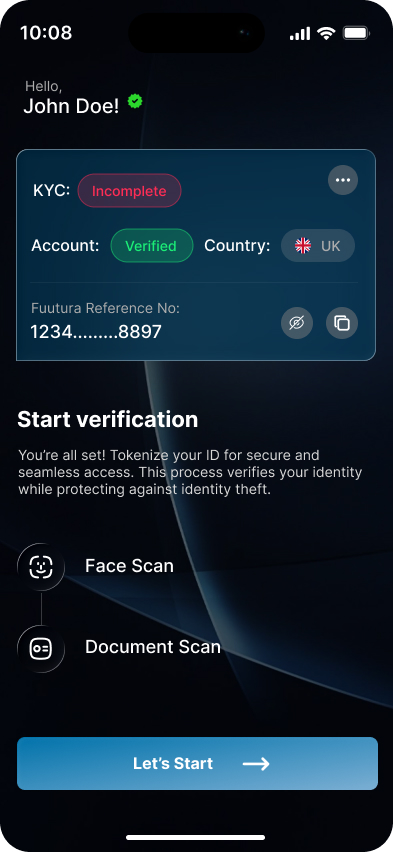
Biometric verification
Facial recognition with real-time liveness detection.
Document capture & AI checks
AI-guided framing, then instant authenticity and fraud detection on the document itself.
Proof of address
A utility bill or bank statement, checked against the record.
Identity token minted
A blockchain-backed token issued for reuse across the ecosystem.
Passports, national identity cards, driving licences, military IDs and residence permits are all read reliably — and a government ID is enough to begin. No bank account, no minimum balance, no paperwork trail, which is precisely what opens the door for the structurally excluded.
Your keys, Your assets, Your call
Custody is not a feature bolted onto a compliant platform. It is the starting assumption — the client holds the keys, and everything else is built around that fact.
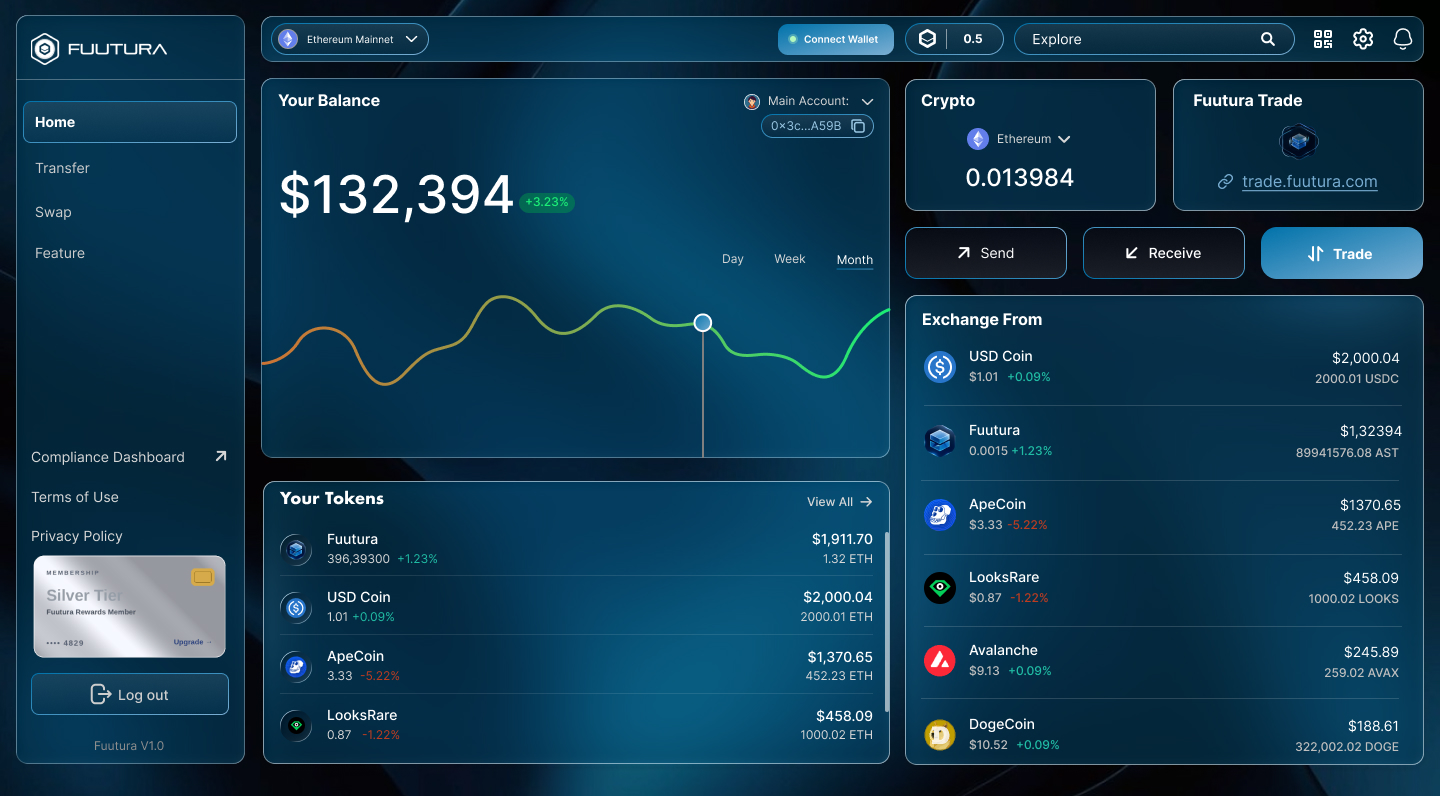
Non-custodial by construction
The client wallet holds the balance. A position contract holds only the collateral committed to it — never the balance itself.
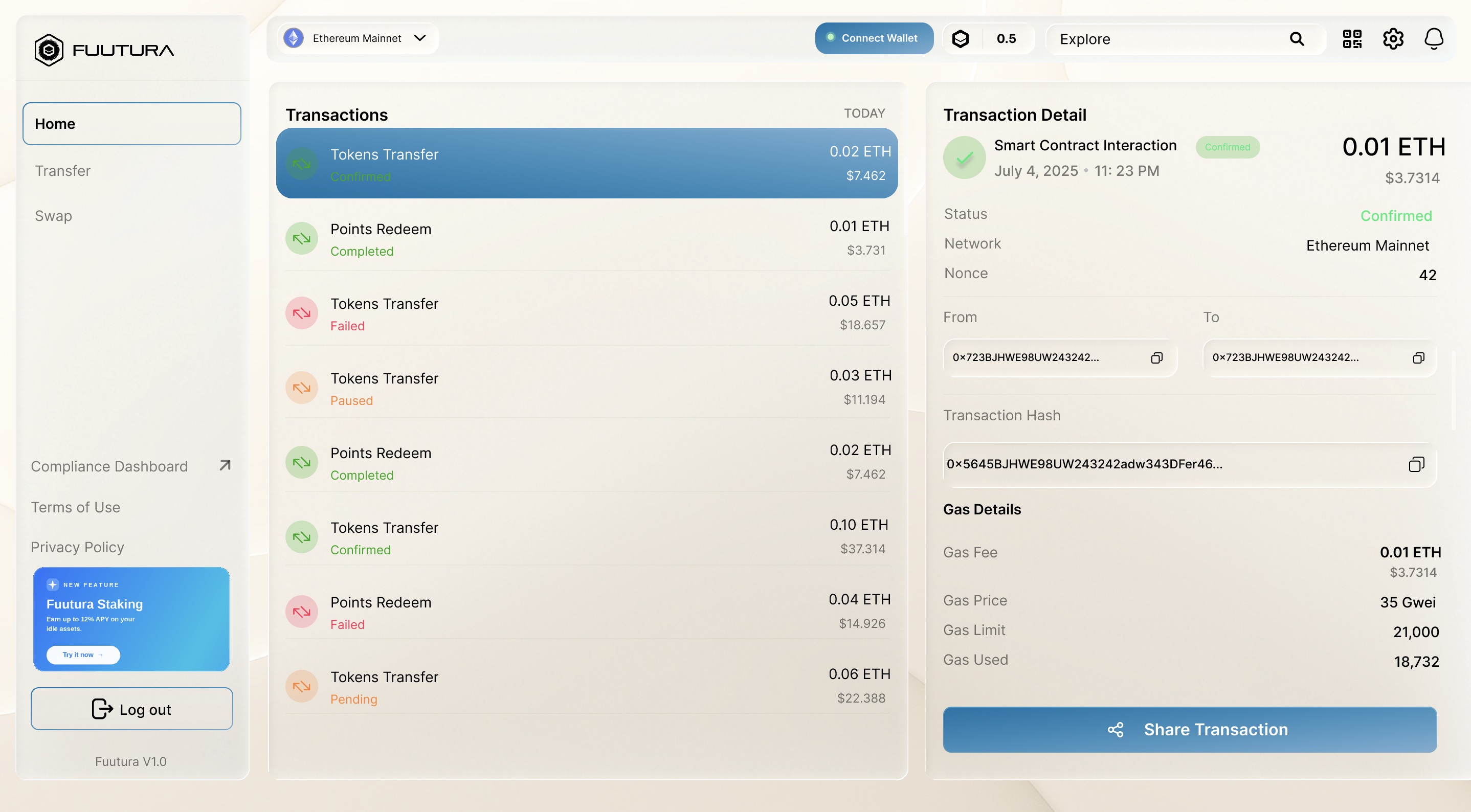
One view of everything held
Balance, tokens, activity and alerts on a single surface, with trade and swap one action away.
Program-controlled collateral
Rules-based and on-chain. Fuutura cannot move client funds outside the logic both sides agreed to.
Seamless transaction experience
Built for people whose first wallet this is: no seed-phrase ceremony, no gas token to acquire first.
The cost of sending money home
Remittance is where the incumbent system charges the most to the people who can least afford it — a 5–10% levy on money already earned. On-chain settlement removes the correspondent-banking chain that creates both the cost and the delay.
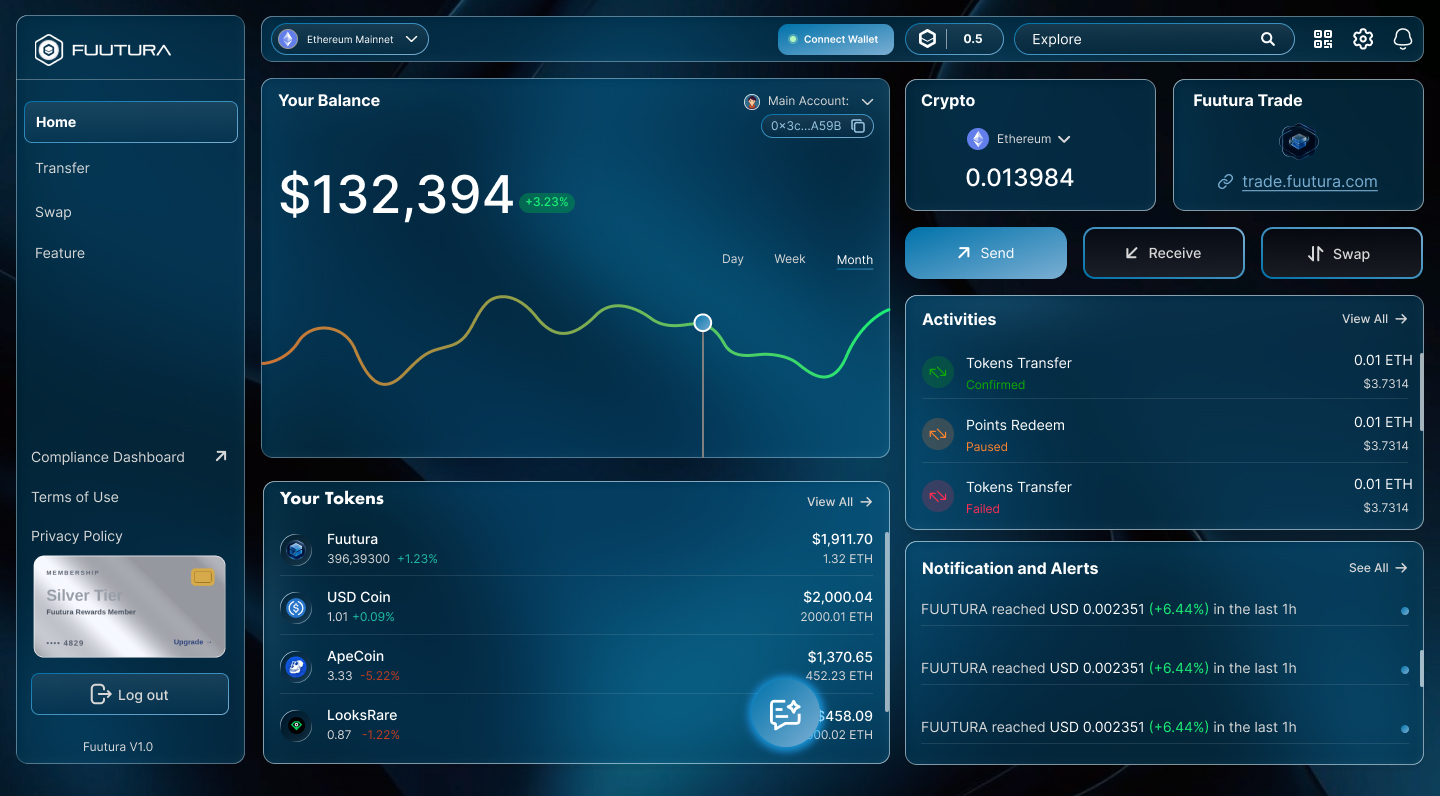
Remittance is the clearest single case for the architecture: identity already verified, value already on-chain, settlement already instant. The saving is structural, not promotional.
The wallet, where the web is
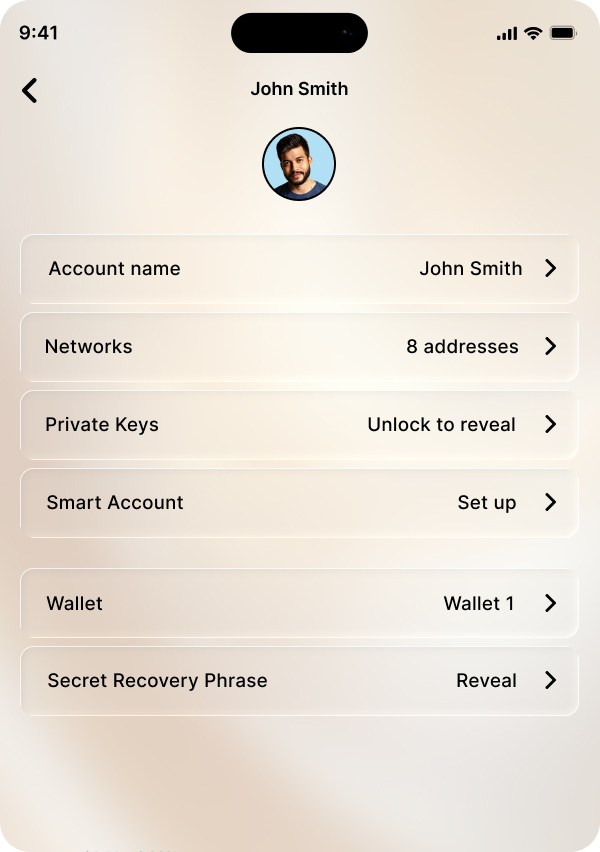
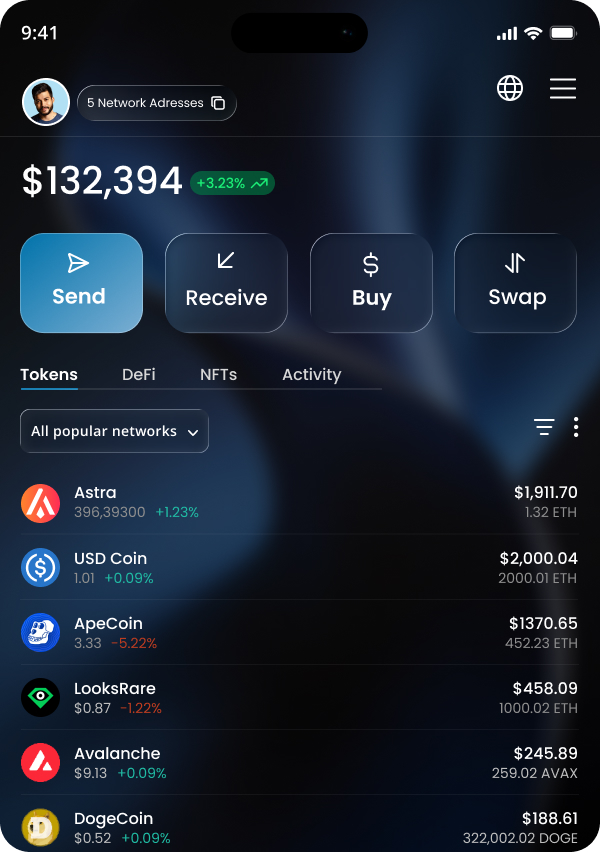
Self-custody only works if it is present at the moment of use. The extension puts the same keys and the same compliance perimeter into the browser, beside whatever the client is already doing.

Keys stay with the client
Institutional-grade key management, with explicit signing and approval flows on every transaction.
Parity with the main app
The same accounts, balances and networks as the web wallet — one identity, not a second setup.
Native browser fluency
Modelled on the extension conventions people already use, so nothing has to be relearned.
Connects the ecosystem
Authenticates straight into Fuutura Trade and partner venues without a separate wallet.
Real access to the global financial system, for millions across the Global South
Built as infrastructure, made to last — and licensed so it can grow where it is needed most.
Verify
Unified compliance, 180+ countries
Trade
Thousands of Instruments
Connect
Public L2 · tokenisation next